Genicular artery embolization (GAE): a minimally invasive treatment for knee osteoarthritis pain. Indications, technique, and clinical outcomes.

Introduction
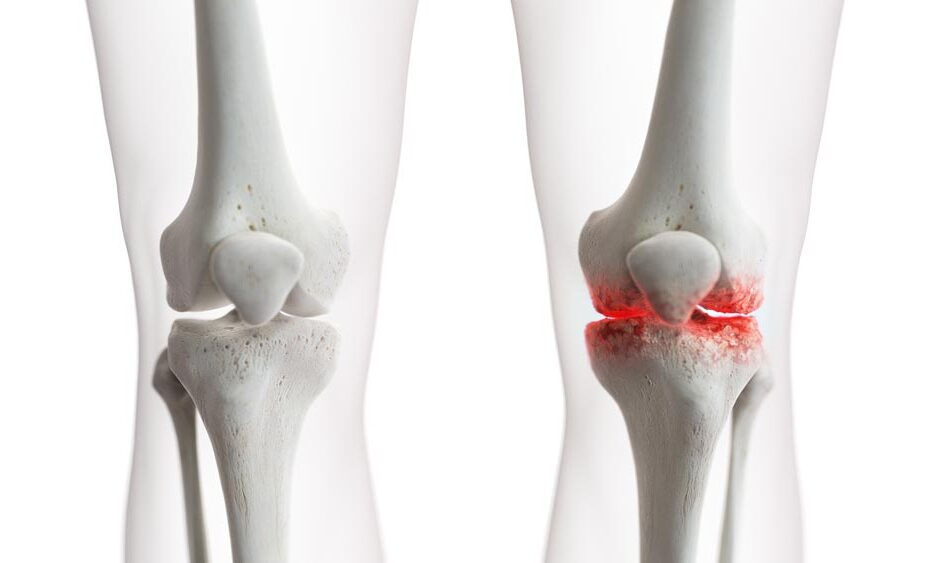
Knee osteoarthritis (gonarthrosis) is a leading cause of chronic pain and functional limitation in the adult population. Its prevalence increases progressively with age: over 20–25% of subjects over 50 show radiological signs of osteoarthritis, while approximately 10–15% develop clinically significant symptoms.

Chronic pain from knee osteoarthritis is multifactorial and not always directly related to the degree of cartilage degeneration. This explains why a significant proportion of patients continue to experience symptoms despite standard treatments such as physiotherapy, anti-inflammatory drugs, and intra-articular injections.
In recent years, a new pathophysiological paradigm has emerged: the role of synovitis and pathological neoangiogenesis as the primary drivers of pain. This is the basis for the development of genicular artery embolization (GAE), an interventional radiology procedure that aims to selectively reduce the pathological vascularization of the synovium.
Pathophysiological rationale
Traditionally, arthritis pain was attributed primarily to cartilage degeneration. However, cartilage is a non-innervated tissue and therefore not directly responsible for pain.
The most recent evidence indicates that:
the synovial membrane is frequently the site of chronic inflammation
pathological neoangiogenesis develops
the new vessels are accompanied by nociceptive nerve fibers
This neurovascular complex contributes directly to the perception of pain.
Magnetic resonance and Doppler studies have shown:
correlation between synovitis and pain intensity
association between hypervascularization and symptoms
👉 GAE intervenes exactly on this mechanism, reducing the flow in the pathological vessels.
Mechanism of action
The effectiveness of the GAE is based on:
Reduction of neoangiogenesis
selective occlusion of pathological vessels
Anti-inflammatory effect
reduction of pro-inflammatory mediators
Nociceptive modulation
Reduction of associated nerve fibers
Directions
Main indication
Genicular artery embolization is indicated in patients with:
symptomatic gonarthrosis
persistent chronic pain (>3–6 months)
failure of conservative therapy
Clinical criteria
Ideal candidates have:
pain VAS ≥ 5/10
significant functional limitation
insufficient response to:
FANS
physiotherapy
infiltrations

Ideal patient profile
mild-moderate arthrosis (Kellgren-Lawrence II–III)
evident inflammatory component
localized pain (medial or lateral)
Advanced directions

GAE also finds application in more complex scenarios:
Patients not eligible for surgery
Relevant comorbidities
High anesthetic risk
Young patients
Need to delay prosthesis
High functional demand
Failure of hyaluronic acid, corticosteroid, and PRP injections
Contraindications
Absolute
active joint infection
uncontrollable allergy to the contrast medium
severe renal failure
Relative
coagulopathies
significant peripheral arterial disease
Pre-procedural evaluation
Clinic
VAS scale
pain pattern
Imaging
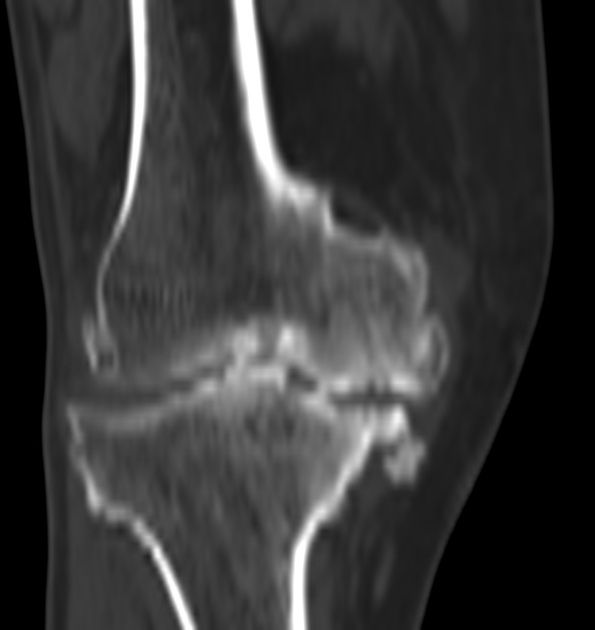
load-bearing X-ray
MRI (synovitis, bone edema)
Doppler ultrasound

Laboratory
kidney function
coagulation
Procedural technique
The procedure is performed in an angiography room, under local anesthesia.
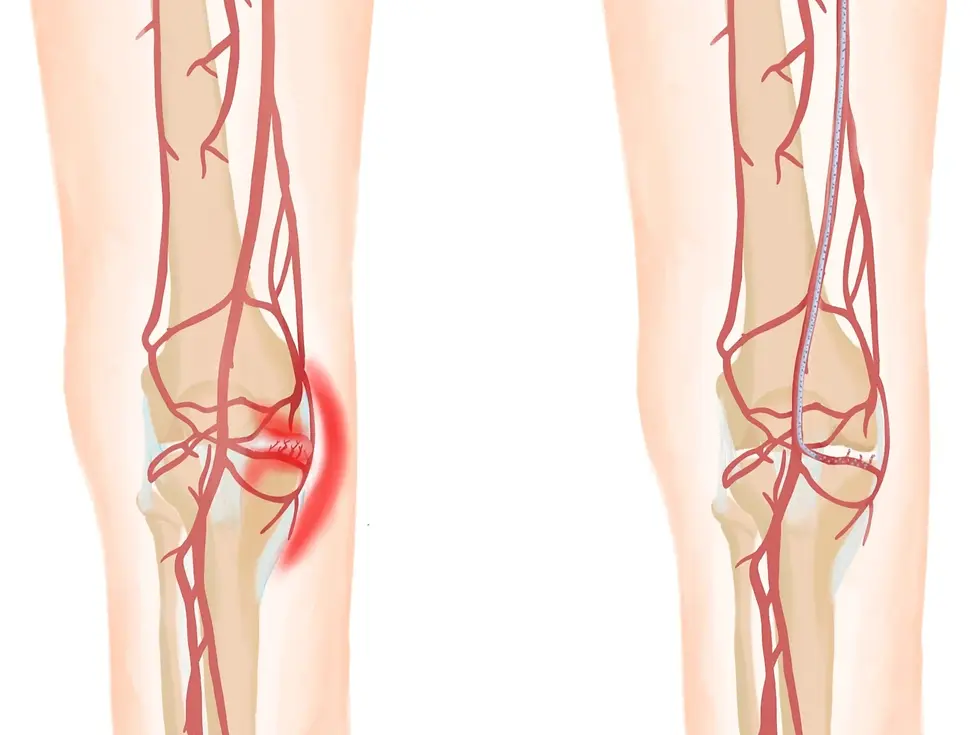
Relevant vascular anatomy
The knee has a rich and complex arterial network, arising mainly from the popliteal artery.
Major branches include:
medial and lateral superior genicular artery
medial and lateral inferior genicular artery
middle genicular artery
These branches form a periarticular anastomotic circle, which ensures redundant perfusion.

1. Arterial access
common femoral artery (most common)
alternative: radial access


2. Selective catheterization
use of 4–5 Fr catheters
microcatheters for selectivity
Using fluoroscopic guidance, the arteries are navigated with vascular catheters, small plastic tubes a few mm in diameter, until they reach the genicular arteries.
3. Diagnostic angiography
identification of synovial blush
correlation with location of pain
4. Embolization
calibrated particles (100–300 μm)
progressive and controlled release

5. Final inspection
blush reduction
preservation of physiological flow
From an interventional point of view, it is essential to identify the branches responsible for the synovitis, avoid non-selective embolizations and preserve the perfusion of healthy tissues.
Average duration: 60–90 minutes


Post-procedural course
same-day discharge
resumption of daily activities: 24–48h
sporting activity: progressive
Complications
Overall rate <5%
post-procedural pain (10–20%)
access hematoma
skin ischemia (rare)
Clinical results
The available data shows:
Pain
VAS reduction: 40–70%
improvement within 1–3 months
Function
improvement: 30–60%
Duration
6-month benefit: ~70%
at 12 months: 60–70%
Response rate
responders: 65–80%
non-responders: 20–30%
Expected benefits
Based on the above, it can be seen that in 65 - 80% of treated patients a significant reduction in pain will be achieved, with an improvement in mobility and an increase in load tolerance which will allow them to return to normal daily activities and perform light sports.
It should be noted that improvement is not immediate but progressive; maximum benefit is achieved within 2–3 months, with some initial mild pain possible.
In non-responders, whose results are below expectations, the procedure does not preclude different types of treatments, infiltrative or otherwise.
Conclusions
Genicular artery embolization is a minimally invasive, safe, and effective procedure in selected patients. It directly targets the pathophysiological mechanism of arthritic pain, offering a valid therapeutic alternative in cases resistant to conservative treatments.


Comments